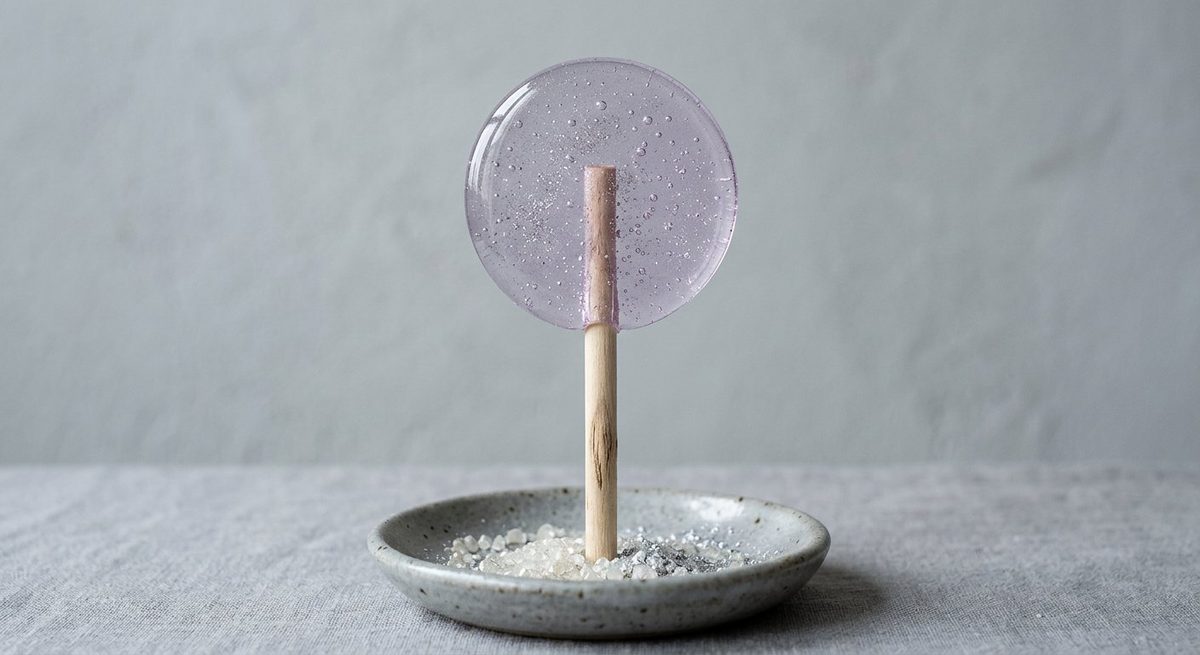
Every summer someone asks why our list is shorter in July and why the gradient candies disappear first. The answer is not staffing, or holidays, or supply. It is water in the air.
Why humidity changes the work
Sugar draws moisture out of the atmosphere. In a kitchen at 40% relative humidity, a batch of candy sitting on the marble loses heat and nothing else. At 70%, the same batch is already absorbing water before it has finished cooling, and the surface starts to go tacky while the inside is still soft. The difference in a finished lollipop is not subtle: it is the difference between glass and a slightly sticky toffee.
Professional candy plants solve this with dehumidified rooms and climate control, and they are right to. A small kitchen on 3rd Avenue with three windows and a very good exhaust fan solves it differently, by choosing what to make and when.
What we do about it
- Cook to a slightly higher temperature on humid days. A couple of degrees removes more water from the syrup and buys back some of what the air will take. It also darkens the sugar a fraction, which is why summer batches of the pale candies can look a shade warmer.
- Start at six in the morning. From May to September, most of our candy is made before nine, while the kitchen is still cool and the air conditioning is not fighting the ovens.
- Retire the fussy items. The silver shimmer in Violet Static and the four-layer gradient in Ember Line both need a wide temperature window. In high humidity that window narrows to a few seconds, and we would rather skip a candy than sell a cloudy version of it.
- Wrap the same day. Sugar that is exposed overnight in a humid kitchen is measurably stickier by morning. Everything on the rack gets wrapped before we go home, even if it means staying late.
- Watch the numbers, not the forecast. There is a hygrometer on the windowsill. A "dry" day on the radio can be 65% inside a kitchen with a pot boiling in it.
What the seasons actually look like
January – March
Our best months. Cold outside air holds very little moisture, the kitchen is stable, and the temperature windows for gradients and shimmer candies are wide open. We make more in these three months than in any other quarter, and we store it properly so the rest of the year has something to sell.
April – May
The transition. Rainy weeks are unpredictable, so this is when we test ideas rather than commit to large runs. If a new candy is going to fail, it fails here, cheaply.
June – August
The short list. Clear, thin, quick-setting candies do fine; layered and shimmered ones are a gamble. We make smaller batches, sell out more often, and ask people to be patient. This is also the season we are most likely to say "not this week" in a reply to an order request — sorry in advance.
September – October
The best light and the best sugar of the year. Cool nights, dry air, and the return of the whole list. Most of the photographs on this site were taken in October for that reason.
November – December
Busiest, and the one period where we stop taking new large orders in early November. Candy for the holidays is made in the first three weeks of December; after that we are wrapping, not cooking.
What this means if you are ordering
Two practical things. First, if a candy is missing from the bench in July, ask — it may simply be scheduled. Second, if you are planning a wedding or an office order for a specific date, tell us the date as early as you can. In cool months two weeks' notice is comfortable; in summer we would rather have five.
Why we don't just buy a dehumidifier
We might, eventually. But there is something useful about working with the weather instead of against it: you learn what the candy is actually doing, rather than what the thermostat says it should be doing. Also, and this is less romantic, a small shop's margin does not stretch to climate control and a second slab both, and we would rather have the slab.
Written in the kitchen at 9301 3rd Ave S. If something here does not match your experience, tell us — we would rather fix the article than defend it: info@zexlavi.sbs.